Household hazardous waste: what junk removal companies can't take
By Clara Larsen · Updated 2026-08-12
This is general safety information, not a substitute for guidance from your municipality or a hazardous waste specialist. Rules and accepted materials vary by location, so confirm specifics locally before disposing of anything hazardous.
Not everything in a garage or basement can go into a standard junk removal load, and knowing the difference ahead of time saves a wasted trip or an awkward conversation on pickup day.
Why some items get excluded
Standard junk removal and disposal streams are built around general waste, landfill or basic recycling. Certain materials pose a contamination, fire, or health risk if mixed into that stream, which is why regulations require them to be handled and disposed of separately, usually through a dedicated facility or depot rather than a standard truck.
Common items that won’t be accepted
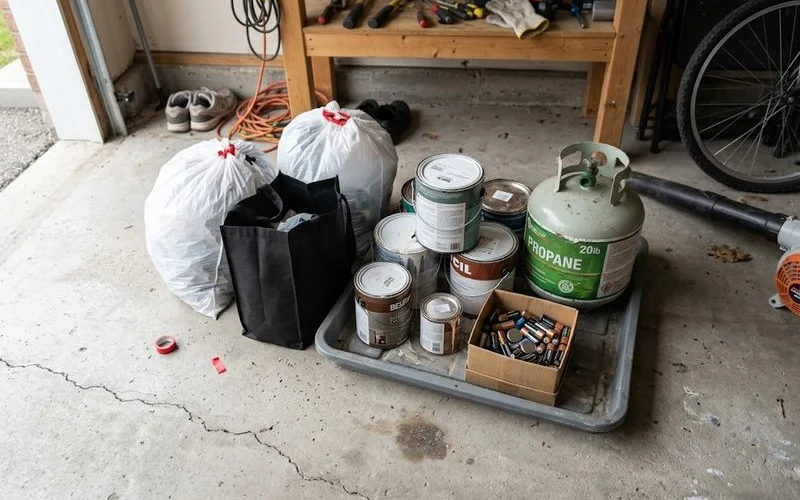
- Paint, solvents, and chemicals. Old cans of paint, thinners, pesticides, and cleaning chemicals need to go to a hazardous waste depot, not a general load.
- Propane tanks and pressurized containers. These carry a real safety risk if handled or crushed incorrectly, so they’re routed to facilities specifically equipped for them.
- Certain batteries. Car batteries and some rechargeable battery types fall under specialized handling requirements rather than general disposal.
- Materials suspected of containing asbestos. Older insulation, some flooring, and certain building materials from homes built before the 1990s may require assessment and licensed handling before removal.
- Biohazard material. Anything involving bodily fluids, mould-contaminated material beyond a minor amount, or similar contamination needs specialized cleanup, not standard junk removal.
What most companies will still take
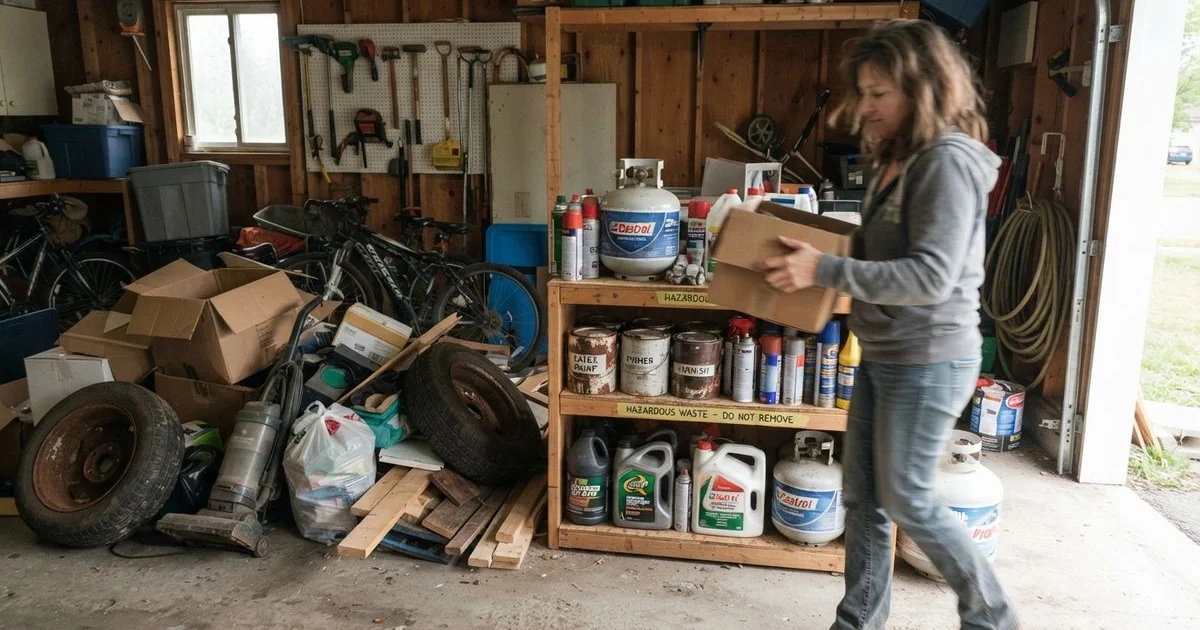
This exclusion list is narrower than people often expect. Standard household appliances, furniture, general electronics like old TVs and computers (frequently accepted for e-waste recycling), and typical renovation debris are all within normal scope for most junk removal companies. The list above is really about a specific set of genuinely hazardous or specialized materials, not a broad category of “anything unusual.” A cluttered garage full of old tools, sports equipment, and boxes of miscellaneous items is almost always fine for a standard load, even if it looks intimidating in volume.
Fluorescent bulbs and mercury-containing devices
A category people often miss entirely is universal waste, a regulatory term covering items like fluorescent light tubes, older thermostats, and some mercury-containing devices. These aren’t as obviously hazardous as a can of paint, but they still require separate collection rather than a standard load, since they can release mercury if broken or crushed during transport. If a renovation involves removing old lighting fixtures, it’s worth asking about this specifically rather than assuming they’re treated the same as general electronics.
| Category | Typically accepted by junk removal | Typically needs a depot or specialist |
|---|---|---|
| Furniture, appliances, general debris | Yes | — |
| Electronics (TVs, computers) | Often, check with company | Sometimes, depending on company |
| Paint, chemicals, pesticides | No | Yes, hazardous waste depot |
| Propane tanks | No | Yes, specialized facility |
| Suspected asbestos material | No | Yes, licensed specialist |
Where these items actually go
Most Ontario municipalities operate a household hazardous waste depot, or hold scheduled drop-off events throughout the year, for exactly this category of material. Locations, accepted items, and hours vary by municipality, so checking your local waste management page before loading anything into your car is the most reliable way to confirm you’re headed to the right place. Many municipalities pair this depot access with other no-cost programs; see free and low-cost junk removal options for the rest of what’s available before you pay for a full-service pickup.
Why this matters beyond convenience
Mixing hazardous material into a general load isn’t just against most companies’ policy, it can create a real safety issue for the crew handling it and, in some cases, contaminate an otherwise clean disposal stream that would have gone to recycling. Flagging anything questionable to the company before pickup day, rather than hoping it goes unnoticed, is the straightforward way to avoid a problem on-site. Most crews would rather answer a quick question in advance than discover something unexpected once the load is already on the truck.
A simple way to sort before the crew arrives
If you’re not sure whether something falls into a restricted category, a rough walk-through of the space with this list in hand catches most of what matters. Set aside anything liquid, anything pressurized, anything you’d hesitate to put in your own household garbage, and any building material from an older home that you’re not certain about. Everything else can usually go straight into the standard load without a second thought.
Browse eco-friendly and donation-based disposal providers on the Ontario Junk Removal Directory who are experienced sorting mixed loads correctly, and see our scoring method for how we evaluate them.
Questions people ask
- Why can't junk removal companies take paint or chemicals?
- These materials are classified as hazardous and require specialized handling and disposal separate from general waste, which standard junk removal trucks and disposal streams aren't set up for.
- Can old propane tanks be picked up with regular junk?
- No. Propane tanks and other pressurized containers need to go to a facility equipped to handle them safely, not a standard landfill or transfer station load.
- What about old electronics and TVs?
- Many junk removal companies do accept e-waste like old TVs, computers, and small electronics, often routing them to a dedicated recycling stream rather than standard disposal, but confirm with the specific company first.
- Where do I actually take hazardous household items?
- Most Ontario municipalities operate a household hazardous waste depot or scheduled drop-off event. Check your municipal website for the nearest location and current hours.