Renovation and demolition debris removal costs in Ontario
By Clara Larsen · Updated 2026-08-04
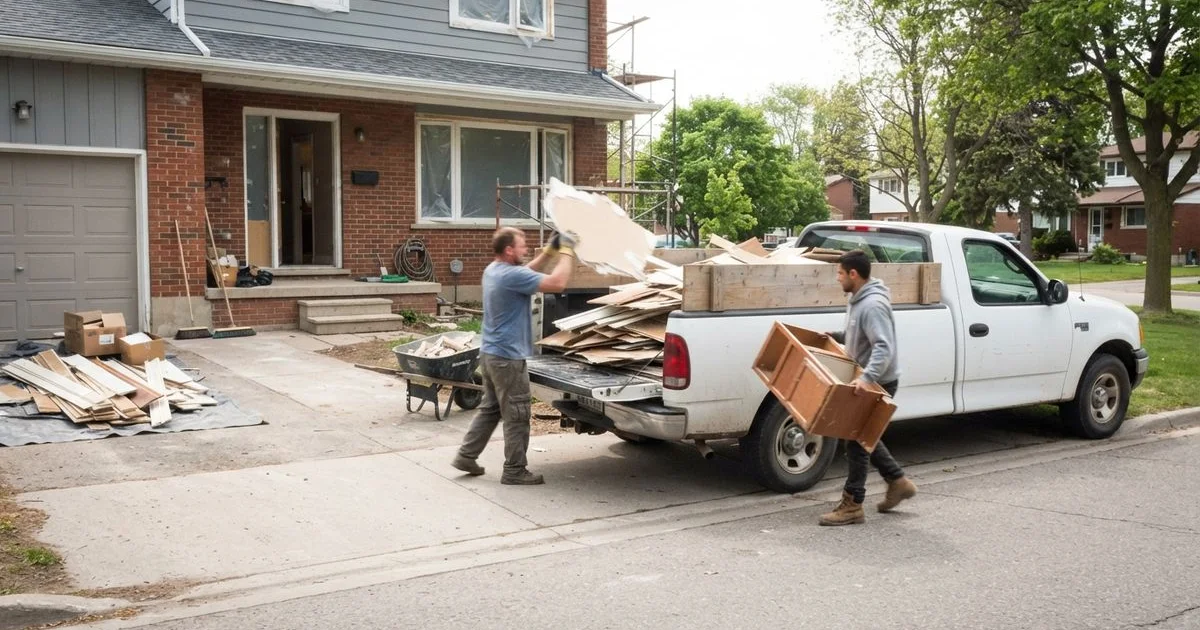
Renovation and demolition debris is priced differently from a typical household cleanout, and the gap surprises people who assume “junk is junk.” The difference comes down almost entirely to weight and the disposal category the material falls into.
Why this material costs more
Disposal fees at landfills and transfer stations are largely charged by weight, not volume. A truckload of couch cushions and cardboard weighs far less than the same truck space filled with drywall, tile, or concrete. Since junk removal and debris pricing both build in disposal costs, denser material pushes the price up even when it looks like a similar-sized load to household junk.
What typically drives the total
A handful of factors matter most for renovation and demolition jobs specifically:
- Material type. Drywall, tile, brick, and concrete sit at the heavy end. Wood framing and general renovation offcuts are lighter and cheaper to move.
- Volume. Same principle as household junk, priced by truck load or bin size, from a small partial load up to a full 30-yard bin for a major demolition.
- Specialty materials. Anything requiring separate handling, certain insulation types, treated wood, or material suspected to contain asbestos, adds cost and sometimes requires a licensed specialist rather than standard debris removal.
- Access and timing. A renovation still in progress often means debris needs to move through an active job site, which can add time compared to a clear, finished space.
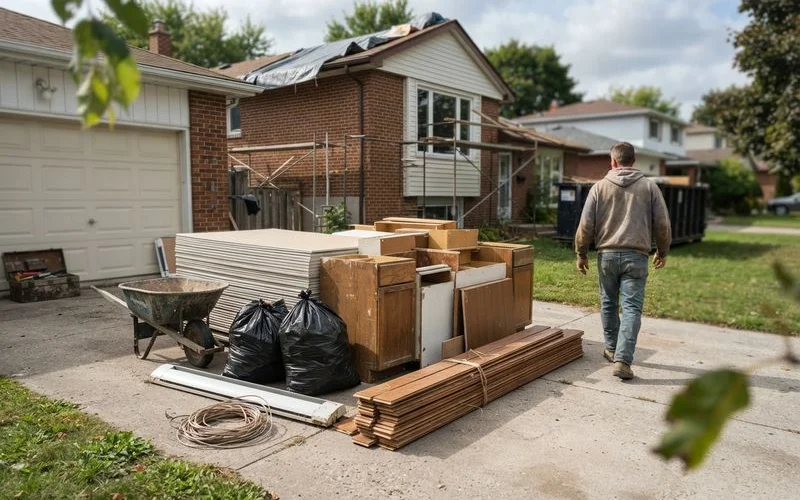
Typical cost patterns by job type
| Project type | What’s typical | Cost driver |
|---|---|---|
| Single room reno (kitchen, bath) | Moderate volume, mixed materials | Volume plus material weight |
| Roofing job | Shingles, moderate volume, very heavy | Weight dominates |
| Whole home renovation | High volume, mixed heavy materials | Volume and weight both high |
| Demolition or new construction | Highest volume, often includes concrete | Weight is the primary factor |
Roofing jobs are a good example of the weight effect: shingles don’t take up much truck space but are dense enough to fill a weight allowance quickly, which is why they’re often priced closer to a much larger volume of lighter material.
A note on hazardous or restricted materials
Some renovation and demolition projects, particularly in older homes, turn up material that needs specialized handling rather than standard debris removal, insulation, certain flooring adhesives, or anything suspected to contain asbestos. If your home was built before the 1990s and you’re opening up walls or removing flooring, it’s worth asking a contractor or specialist to assess the material before a standard debris crew handles it, since standard removal isn’t equipped for hazardous material and mixing it into a regular load can cause real problems.
Getting an accurate quote
Because material type affects price so directly, a vague description over the phone (“some renovation stuff”) tends to produce a rough estimate that shifts once the crew sees the actual debris. Photos, or a description that separates out heavy material like tile and concrete from lighter framing and drywall scraps, gets you a number closer to what you’ll actually pay.
Bin rental versus scheduled pickups for ongoing work
For a renovation stretching over weeks rather than a single demolition day, the debris tends to accumulate gradually rather than all at once. A bin left on-site for the duration works well here, letting you load as you go rather than scheduling repeated pickups. A short, intense demolition job with a big one-time volume often suits the same approach, just sized to a larger bin. Either way, matching the removal method to how the debris actually accumulates, steady versus all-at-once, tends to be more cost-effective than defaulting to one option out of habit.
Separating debris streams where it pays off
Some materials are worth separating rather than mixing into a single load, particularly clean wood, metal, and concrete, since certain facilities charge lower rates for sorted material headed to recycling versus mixed debris headed to landfill. This takes more effort on-site, keeping separate piles rather than one general heap, but for a large enough project the savings on disposal fees can be worth the extra organization. Ask your provider whether they offer any pricing benefit for sorted loads before assuming everything needs to go in together.
Browse providers in the demolition and renovation debris category on the Ontario Junk Removal Directory, and see our scoring method for how pricing accuracy factors into how companies are scored.
Questions people ask
- Why does renovation debris cost more to remove than furniture?
- Weight is the main driver. Drywall, tile, and concrete are dense and heavy relative to their volume, which means disposal fees, charged largely by weight, add up faster than for lighter household items.
- Should I rent a bin or hire a full-service crew for renovation waste?
- It depends on how the debris accumulates. A short demolition job with a big one-time volume often suits a bin. An ongoing renovation generating debris in smaller batches over weeks may work better with scheduled pickups.
- Are there materials that cost extra to dispose of?
- Yes. Asbestos-containing material, certain treated wood, and some insulation types require specialized handling and cost more than standard construction debris.
- Can I mix renovation debris with household junk in the same pickup?
- Often yes, but pricing usually reflects the heavier material, so a mixed load can cost more per volume than pure household junk. Ask how the company prices mixed loads before booking.
Related on this site
- Browse demolition & renovation debris removal providers
- Best demolition & renovation debris removal in Ontario →
- Staying safe during a DIY renovation debris cleanout
- What junk removal costs in Ontario and what changes the price
- Dumpster and bin rental pricing in Ontario: what drives the cost
- All guides →