Dumpster bin permits in Ontario: what you need to know
By Clara Larsen · Updated 2026-07-27
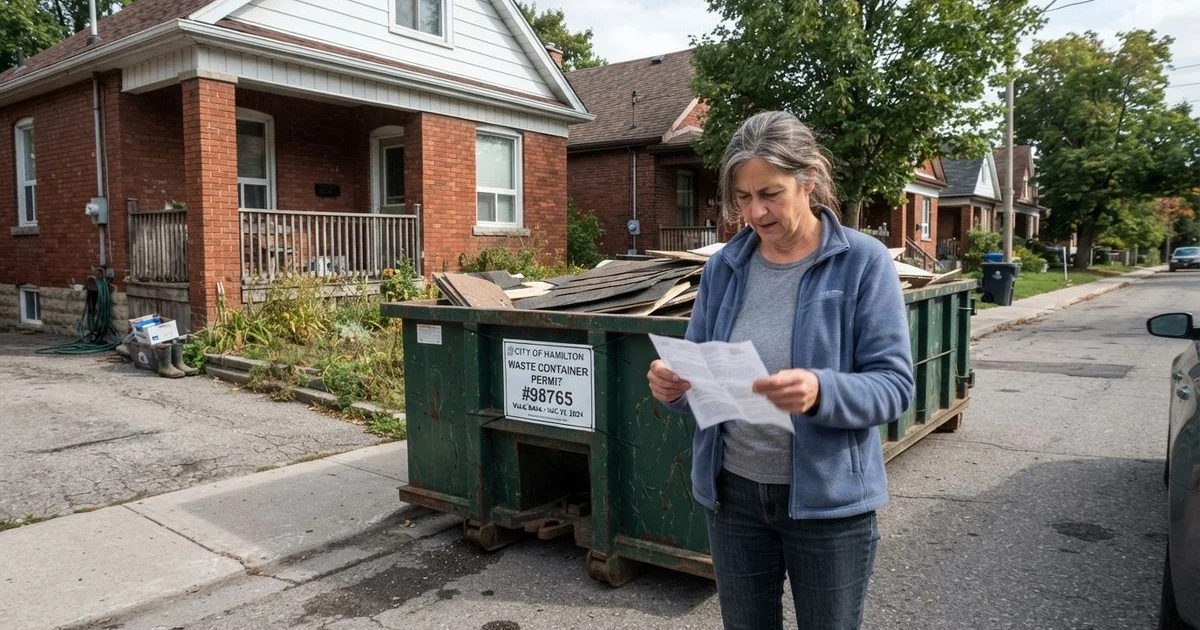
This is general information about how bin permits typically work in Ontario, not legal advice for your specific municipality. Rules vary by city and town, so confirm the current requirement with your local municipal office before you book.
When a permit is needed
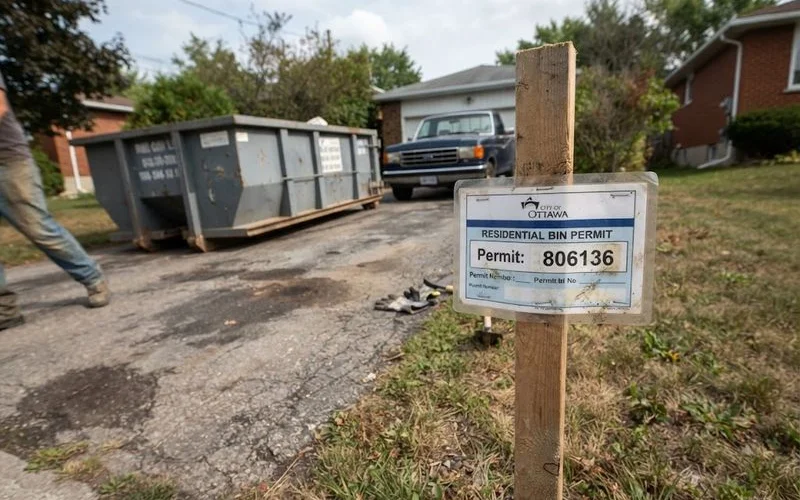
The dividing line is simple in principle: private property versus public property. A bin sitting entirely on your driveway, backyard, or another part of your own lot generally does not need a permit. A bin placed on a street, laneway, sidewalk, or boulevard, meaning any part of the municipal right-of-way, almost always does. The reasoning is straightforward from the municipality’s side: anything obstructing a public road or walkway needs sign-off for safety and access reasons.
Why this trips people up
The most common situation is a driveway that’s too short or too narrow for a large bin, forcing part or all of it onto the street. It’s easy to assume this is fine since it’s “basically” still your property line, but municipalities generally look at where the bin physically sits, not who owns the adjacent land. If your driveway can’t fully contain the bin, plan on a permit rather than finding out after delivery that it’s required.
Who’s responsible for getting it
This varies by rental company. Some include permit handling as part of their service, filing the application and passing along the fee. Others treat it as the customer’s responsibility, expecting you to apply through your municipality directly. Ask this specifically when you book, since assuming the company handles it, when they don’t, is how a bin ends up on the street without paperwork.
| Placement | Permit typically needed | Who usually applies |
|---|---|---|
| Fully on driveway or private lot | No | N/A |
| Partly or fully on street, lane, or boulevard | Yes | Varies by company, confirm at booking |
What the process usually involves
Municipal permit applications for temporary bin placement typically ask for the address, the bin dimensions, how long it will stay in place, and sometimes proof of the rental booking itself. Fees and turnaround times differ significantly between municipalities, so applying with a few days of buffer before your planned delivery date is safer than assuming same-day approval.
What happens if you skip it
Consequences vary by municipality but commonly include a fine issued to the property owner, the rental company, or both, and in some cases an order to relocate or remove the bin. Beyond the direct penalty, an unpermitted bin blocking part of a street can also become a liability issue if it contributes to an accident, which is one more reason to sort this out before delivery rather than after a neighbour or bylaw officer flags it.
Timing the permit around your project
Because permit turnaround varies so much between municipalities, the safest approach is to apply as soon as you know a street placement is likely, not once the bin is scheduled for delivery. A short renovation with a tight window is exactly the situation where a slow permit office can stall the whole project. If your municipality offers online applications, that’s usually the fastest route, while some smaller towns still require an in-person visit or a mailed form, which adds days to the process.
What to ask the rental company before you book
A few direct questions upfront save a lot of back-and-forth later: does the company file the permit application for you or is that on your end, do they know your specific municipality’s typical turnaround time, and is the permit fee included in the quote or billed separately. Companies that operate regularly in a given city or region often have a good sense of local timelines from experience, which is worth tapping into rather than guessing.
| Question to ask | Why it matters |
|---|---|
| Who files the permit | Avoids assuming it’s handled when it isn’t |
| Typical municipal turnaround | Helps you plan delivery timing realistically |
| Is the fee included in the quote | Prevents a surprise line item later |
Browse current dumpster and bin rental providers on the Ontario Junk Removal Directory; many can tell you upfront whether your municipality’s permit process is fast or slow, and our scoring method factors in how reliably a company handles logistics like this one.
Questions people ask
- Do I need a permit for a bin on my own driveway?
- Generally no. A bin placed entirely on private property, like a driveway or backyard, does not require a municipal permit in most Ontario municipalities.
- Who applies for the permit, me or the rental company?
- It varies by company. Some handle the application as part of the rental, others expect the customer to apply directly with the municipality. Confirm this before booking if street placement is your only option.
- How long does a permit take to get approved?
- Timelines vary by municipality, from same-day online approval to a week or more for larger cities during busy renovation seasons. Applying early protects your delivery date.
- What happens if a bin is placed without a required permit?
- Municipalities can issue a fine to the property owner or the rental company, and in some cases order the bin removed. This varies by city, so check local rules rather than assuming.
Related on this site
- Browse dumpster & bin rental providers
- Best dumpster & bin rental in Ontario →
- Dumpster and bin rental pricing in Ontario: what drives the cost
- How to rent a dumpster bin in Ontario: the full process
- Hiring an insured junk removal company: why it matters
- Landlord rules for abandoned tenant belongings in Ontario
- All guides →